Sunday, March 27, 2016

Everglades Day Three - Corkscrew Swamp Sanctuary

Heading into Day Three I was stumped, my Dad and I had exhausted all the best photography locations I had researched and still had a morning of shooting available. I Googled "best boardwalk near Naples" to get a specific location on a boardwalk we had driven past a couple of days earlier. Instead Corkscrew Swamp Sanctuary popped up as the go-to spot in the Naples area. From their website:

The story of how Corkscrew Swamp became a sanctuary is one of the important conservation successes of our time. National Audubon began protecting the wading birds nesting within Corkscrew Swamp in 1905. During the 1940's and 50's, cypress forests in Florida were being leveled for their timber. Audubon realized the forest must be saved. At the time, Corkscrew was isolated and almost impossible to access. Today it is an oasis in a made-over landscape. In other areas, many of the wild swamps and much of the teeming wildlife, that were characteristic of this region less than a generation ago, are gone. Corkscrew Swamp Sanctuary's value thus becomes more significant with every passing year.

Cypress Knees
A 2.25-mile boardwalk meanders through pine flatwood, wet prairie, around a marsh and finally into the largest old growth Bald Cypress forest in North America. These impressive trees, relatives of the redwood, tower 130 feet into the sky and have a girth of 25 feet. Their massive branches are draped with mosses, lichens, bromeliads and ferns. The forest is also home to hundreds of alligators, otters, white-tailed deer and red-bellied turtles. A wide variety of wading birds, songbirds, raptors and the fabulous Painted Bunting can be seen throughout the year. Photo opportunities are available at every turn of the boardwalk trail.

Early Morning mist hung over the meadow

How could we NOT visit Corkscrew? 

We arrived early in the morning and walked past a group of people in the parking lot who seemed excited. I thought they were just excited to see each other so we walked on past. Turns out they had spotted a rare little bird - lesson learned "pay attention knucklehead!"

Dad and I were the first ones to walk on the board walk that morning - let me be more specific - I was the first. Why do I mention this? My Dad trailed behind me by 10 feet or so therefore I was the first one to walk through all the spider webs that had been spun across the boardwalk overnight. Just imagine me taking a few steps, walking into a nearly invisible strand of spider web then fighting to untangle myself just hoping a spider didn't land on me in the process...while Dad softly chuckled.


My Dad, Andy, a man with a plan

The high water affected Corkscrew too - their birds were nesting later or not at all. I hoped to see their Barred Owls and went directly to the area they had been spotted the day before. The owls nest, lay eggs and when they hatch the owls spend hours getting food for their young. I asked one of the volunteers how these owls can eat when the ground is flooded after I explained that our Barn Owls in Utah eat mice, voles etc. "They eat fish." He went on to explain how the owls will perch on the boardwalk railing, oblivious to people, stare into the water to find their prey then dive down to get fish, crayfish and other aquatic creatures. That blew my mind - an owl who fishes. To any reader who says "of course they do, have you never heard that" I extend my apologies - I had no idea and I would have loved to have seen those Barred Owls fish.

In the same area of the boardwalk we spotted two Anhinga nests. How could we not, they were beehives of activity with a female vocalizing while sitting on the nest and the two males flying from bush to bush to find twigs to build the nest.  
 

The male has his twig and is headed back to the next.


The Anhinga above "looks" stately as he poses with his twig...but that's not the whole story.


The sequence starts as this young Anhinga reached out to snap off a twig. 


He tossed it in the air to rearrange it for his stately pose.


Strike pose.
 
 
Then he turned around, accidentally dropped his twig into the water far below and was left staring, crestfallen, as his twig fell out of reach.

I know I am putting human emotions into a bird's actions - but he really did look crestfallen...


We walked along the boardwalk and saw this Little Blue Heron. That's his official name and no I didn't supersaturate him with Photoshop, he really is that beautiful color throughout.


Another Little Blue Heron though not nearly as saturated. BTW both birds had two legs, they just chose to rest one under their feathers while I was taking their portrait.


At one point I looked up and was surprised to see an adult raccoon scuttling toward me on the boardwalk. Raccoons are pretty common but we hadn't seen any mammals in the Everglades (direct result of human introduced snakes) so I was a little taken aback. This one quickly left the boardwalk but the highlight of the day was when we heard from other visitors about the two baby raccoons nearby.


My Dad and I rushed over to see the two baby raccoons and were able to see their sweet little faces.


We spent a few minutes with them but didn't want to push them from their tree so we left after a few good photos. My Dad got a great shot of the two of them together that I hope to share in a future blog post.


Before we left I was lucky to photograph this female cardinal. The males are a brilliant red - the ladies a little more understated. We do not have cardinals in Utah therefore the only time I get to see them is on my trips back east.   

Thank you for joining me and my Dad on the Everglades trip I'll wrap up the trip with a post tomorrow then on to the greatest hits.


.

Saturday, March 26, 2016

Everglades National Park - Day Two


 Everglades National Park - Day Two

I'd like to say that my Dad and I were up with the sun - but we were already on the road an hour before the sun rose. We got an early start so we could arrive at the Shark Valley entrance into the Everglades National Park before the crowd built. We got there before the park opened, we parked outside and walked in past the gate (that's allowed, we weren't trespassing).  The first bird to greet us was this Purple Gallinule - the jewel of the Everglades.  I had only seen one of these pictured in a brochure, it was a treat to see one right in front of us in the morning light.


We photographed the purple gallinule for a while then returned to the car and reentered the park. It took a moment to find our subject - he had hidden himself from the early visitors by climbing in to the brush. D.A. Sibley states in his Guide to Birds book that a purple gallinule "usually walks on floating vegetation or climbs through brush rather than swimming." We chuckled as we witnessed that behavior - this bird climbed down his branch and reached out with his beak to snag a lily pad leaf to step onto rather than get his feet wet.


Check out the size of those yellow feet
After entering the park and finding a parking spot we arranged for seats on the first tram to circle the park. The National Park Service facilitates a tram ride that follows a 15 mile path that is shaped like a spread open bobby pin. We started on the rippled side, rounded the curve at the top then followed the straight side back to the beginning of the ride. Along the way we spotted very few birds a result of the high water mentioned in the previous post. We did see plenty of alligators but mostly we rode along and listened to our guide teach us about the Everglades ecosystem. 


My Dad was surprised that the Everglades are not like a jungle - rather a flooded savanna of waist high grasses dotted with tightly bunched groups of trees. The river moves slowly, a quarter of a mile a day, which creates a "water through cheesecloth" effect resulting in clean, clear water with no foul smell. 

An interesting fact that you can verify yourself - when the Corps of Engineers built the tram path they dug pits to mine the limestone. The pits were shaped to spell "L-I-F-E" as seen from the air - or as seen on Google maps - though defining the L and E are not as apparent as the F and I. Type in "Shark Valley tram road" into Google maps, switch to satellite view and zoom in - pretty cool.  

Along the tram road we did see this tri-color heron.


As well as this female Anhinga - she has a light tan neck as opposed to males having a black neck.


We didn't see any small animals - only birds or alligators. This is the undisputed result of human interference in the ecosystem.  Over the past decades people have released their pet snakes - Burmese Pythons mostly - "into the wild."  We all know the thought process - "my pet has outgrown its cage, I'm kind of over having a pet snake - I'll do it a favor and release it into the wild." That action, repeated many times by many people, has resulted in a pandemic of invasive species estimated of tens of thousands to hundred of thousands of snakes with no natural predators. In July of 2015 an 18 foot python was captured in Shark Valley - second largest caught in Florida - EVER. The snakes eat young and old mammals - wiping out 99% !!! of all mammal species in the Everglades. I cannot wrap my head around that news. Imagine going to Yellowstone National Park and only seeing Elk and no other animals -incomprehensible.

We enjoyed our Shark Valley experience and drove to another location famous for its wildlife photography offerings. When we arrived we realized a roadside hedge had grown to 15 feet tall essentially restricting our view to the road. That was a bust!

Dad and I drove back into town for lunch and a strategy session. We had been to most of the locations I knew of and been relatively skunked. Then I remembered driving past Turner River Road - a dirt road with a 20 foot wide creek running along the right side of the road. We came up with the plan - put my Dad in the passenger seat and I would drive him along the road so he could shoot out the window. After one pass we'd turn around, I would retrieve my camera from the back, put him in the seat behind me therefore we'd both be able to shoot out the left side windows.

The plan worked out pretty well, these are my shots from the return trip down the road. The highlight for me was seeing my Dad enjoy his wildlife photography opportunity. He is an outstanding photographer who makes his living taking individual and team pictures mostly of local sports teams. His subjects are almost always static and he has the time to thoroughly (read: slowly) check his camera settings. Wildlife photography is usually the complete opposite therefore my Dad had to exercise photography "muscles" that he doesn't usually employ. He did well and enjoyed being pushed to find the subject, get the camera set properly, frame the subject and shoot before the subject flew off.

He and I were all smiles as we photographed these Moorehens - they are duck like Rails - but the backgrounds were so beautiful that it was challenging and fun to make the most of the opportunity.


The wind picked up and began to blow the fine feathers of the Great Egret...
 

Creating a "feathered headdress" of sorts.


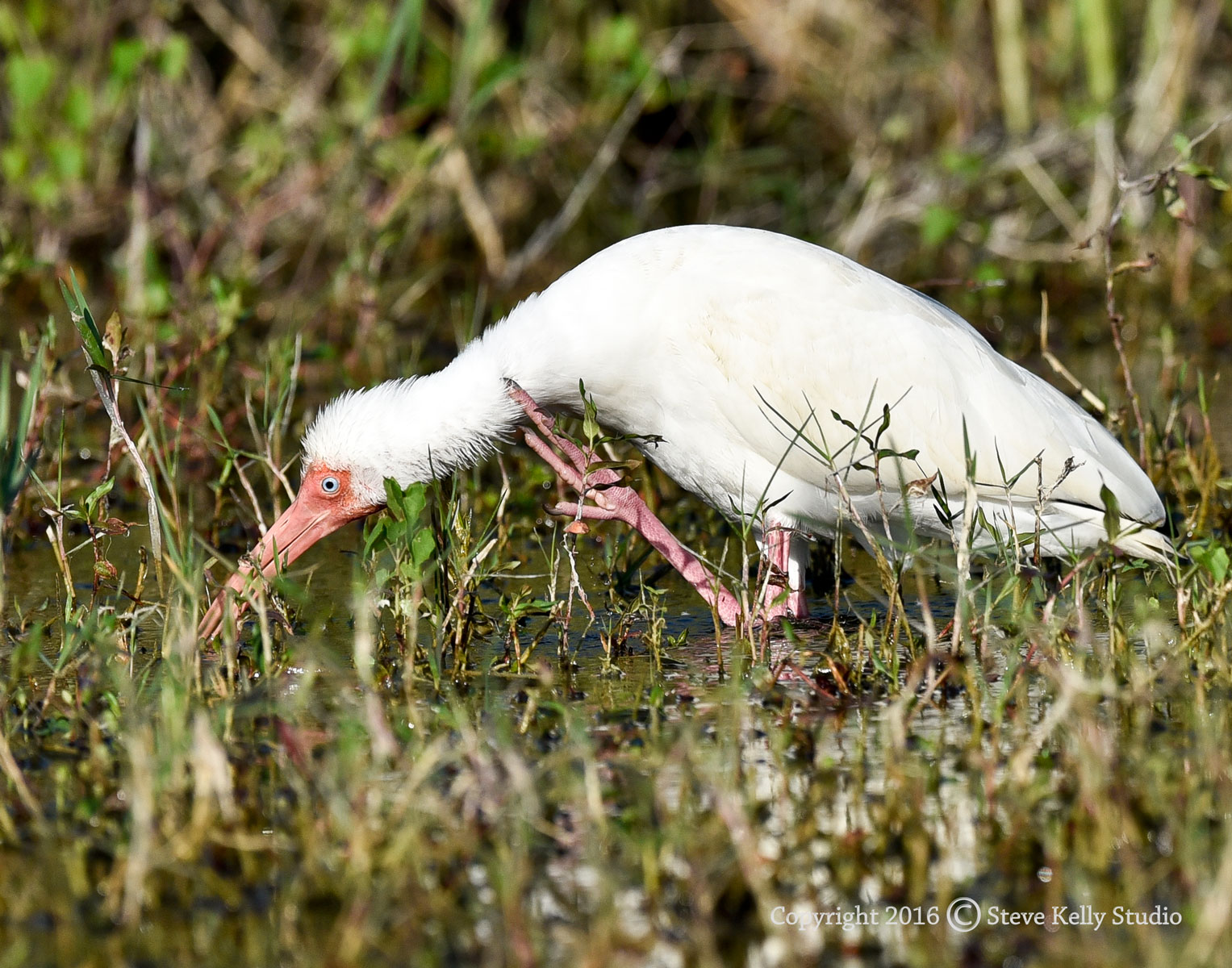
We had seen the Ibis the night before but this was a better chance to get a good photo, with a reflection.


I'm used to seeing birds preen with their beaks so I chuckled a little when I saw the Ibis scratch himself like a cat.  


Lastly, as we were leaving the Turner River Road we puled up along side this alligator floating by a culvert. We were close enough that I had to rotate my camera to the vertical to get the tip of the nose in the picture. 


Before we retired for the night we sped off to find some trees to silhouette against the setting sun. Since the mosquitoes come out about the same time the sun sets, we got a few shots, slapped at a few mosquitoes and headed back to Naples for dinner and a good night's rest.


Day Two was a full day of learning about the Everglades and making the most of our time together. More to come tomorrow, Everglades Day Three - a corkscrew adventure.

Friday, March 25, 2016

Everglades Visit - Day One

Thank you to all of you who visited the Bald Eagle post recently. It reminds me that this blog is an easier method of sharing my pictures - so I'm going to do just that over the next few days. I have planned to post one blog a day for the next few days to highlight an Everglades visit with my Dad and then a greatest hits post. The greatest hits will have a purpose other than patting myself on the back - I've been asked to post specific pictures for uses by certain people/organizations. Instead of emailing them directly I'll use this platform to share with all of you who are interested.

Thank you again for your interest in the beauty of these treasured creatures.

Everglades - Day One

As mentioned in the previous post - Holly and I flew to Florida to visit with her folks in Apopka before I met with my Dad in Sebring. My Dad has always wanted to visit the Everglades to photograph the feathered inhabitants. Since this was his bucket list item I prioritized my visit; enjoy the time with my Dad, make sure he had the chance to get photos and lastly for me to try to get good photos. With that in mind I'll share my pictures but know that my Dad got some great photos too - many better than mine - and I am thrilled to say that. When his final images arrive I will ask if he'll let me post a blog that compares images to illustrate that two people can be side by side and yet see things differently.

My Dad, Andy, shooting in Everglades National Park
 

Our first day together started with a drive down the center of the state along state highway 29, our first stop was at Fakahatchee Strand State Preserve. The Preserve is very large yet we only saw a small section by driving on a dirt road into a remote area. Hidden among the trees was this Great Egret - a common sight usually seen in a more open environment.


Although my Dad had little interest in photographing alligators - I couldn't resist talking one of this gator sunning himself on a log.  


We did see this tri-colored heron wading through the high water. Turns out that the 90 inches of rain in two months made this the wettest March in 10 years. The high water meant many species could not build their nests on the ground and therefore we saw fewer birds than usual. I never got a definitive answer to my question - will they wait for the water to recede then build nests or will they just not produce off spring this year before they migrate north?   


After driving on the dusty road for a while, and not seeing many birds, we retraced our path to visit the Preserve's boardwalk.The boardwalk was very nicely built though we only glimpsed a few birds and animals. From the boardwalk we spotted this bald eagle nest that was rumored to have been in use for decades which measures 10 feet across and reportedly weighed 9 TONS. I have no way to verify that report but it came from one of the experts at a nearby bird sanctuary.
 

We ended up not spending too much time on the boardwalk before driving to Naples to check into our hotel.  I say "check in" but we were in such a hurry to catch the sunset that we got the room keys and returned to the minivan for the drive to the Marsh Bird Sanctuary.

An amazing sight greeted us as we walked a few hundreds of yards into the sanctuary - the arrival and gathering of hundreds of white ibises, young and old. The diminishing light, fast flight and limited sight-lines resulted in sub par photos but the gathering of loud squawking ibises roosting in the trees by the hundreds certainly was a memorable event. The fading light may not have yielded great bird photos but it did create a nice sunset over one of the sanctuary ponds.


A long day of traveling, walking and photographing came to a conclusion at the Cracker Barrel beside our hotel. Dad was smiling in this picture because we had a good day and he speculated that tomorrow's photo ops would be better - and he was right.

 I will post those photos from Everglades Day Two tomorrow.

Tuesday, March 22, 2016

Fishing in Apopka FL - Bald Eagle (Osprey) style

Last week Holly and I visited her parents Tom and Maria in Apopka FL. I purposely did not unpack my camera equipment (that I'd brought for a trip to the Everglades later in the week) so we could spend more time together. BUT I heard a Bald Eagle's cry and saw him land in a tree behind the house. I cautiously approached to get a picture but the eagle saw me and flew before I could get a shot. Minutes later the eagle returned overhead  - it was time to eat and he started spotting fish in the lake.


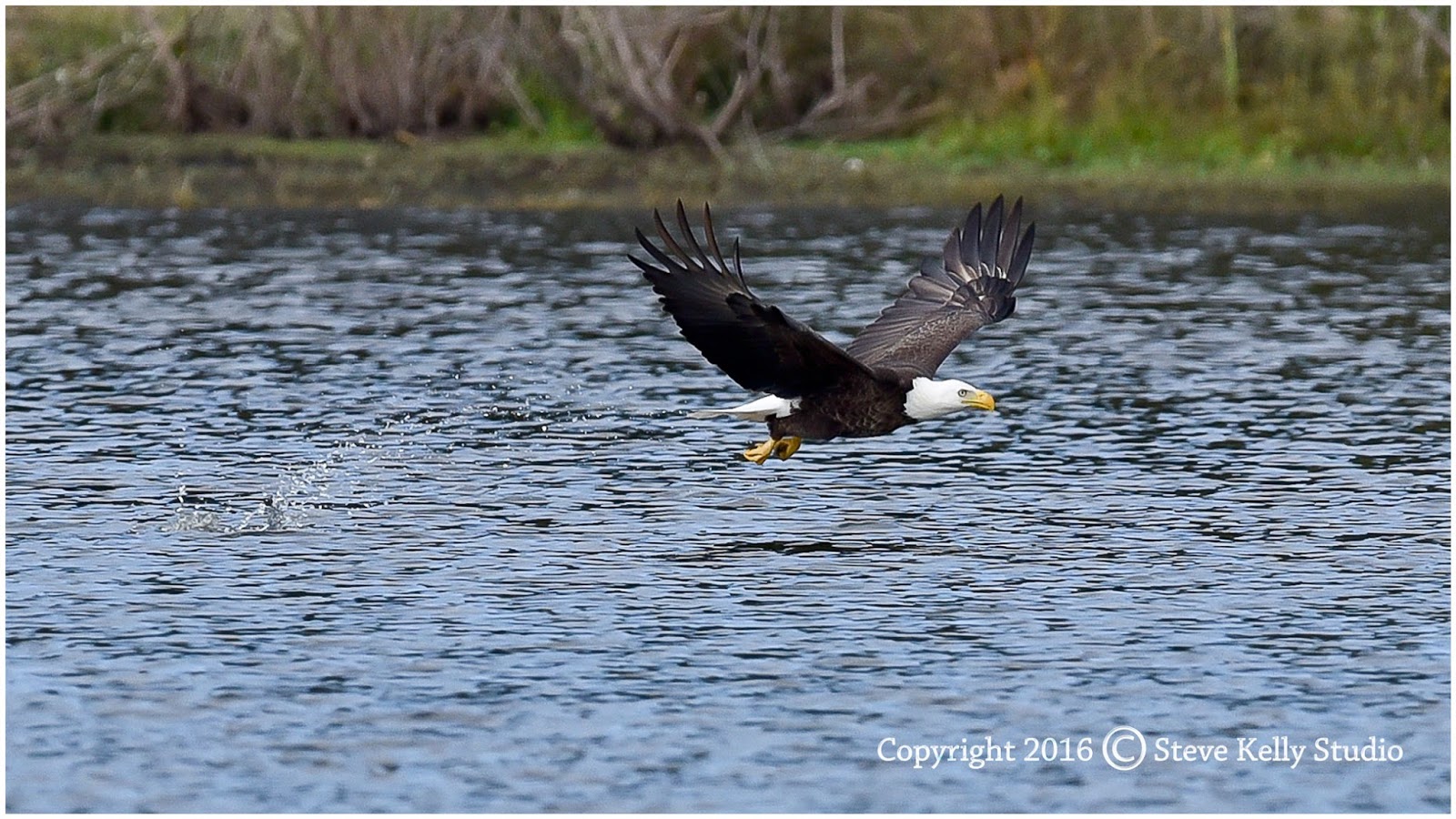
Look closely behind the eagle above and you'll see the splash to indicate the eagle used the "swoop" technique but missed the fish. This technique is the only one I had ever seen Bald Eagles use.

The look makes you think I was disturbing the eagle but I was a good distance away - but I like the way he/she is looking right at me.
 Off to try again..

After 15 or so minutes the eagle returned and swooped down - I was ready to see it pluck the fish from the water.

But once this gorgeous bird hit the water it was obvious that there was a change in fishing technique - somewhat akin to the Osprey method. Osprey will pounce onto a fish, then float while they manipulate their talons to align the fish head forward for streamlined flight then leap from the water.
 Master of all he surveys!
 BUT the fish proved to be a bit too big...
 This is highly overexposed - I'm mortified - but I am keeping it in to show how deep the bird sunk.
 Unable to leap from the water the eagle began to "swim for shore" using its wings like oars.
 After a few moments it tried to leap from the water again.
 Success!


These photos document an amazing moment - not many of us get to see a Bald Eagle fishing and using an alternate technique. The moment is far greater than my photos - I was walking back to the house (thinking about everything else besides photography) and had not changed the settings to best capture this eagle - much to my chagrin.


Monday, March 2, 2015

2015 Paracycling Track World Championship team announcement

A dear friend asked me to revive my blog for the upcoming events. I'll do my best to update this more often so you can follow along on my 2015 cycling adventures.

As far as adventures go, the following is pretty exciting;

 Why would I open my post with this picture? Because I am one of the 16 team members chosen to represent the US at this year's track world championships in Holland!! 


If you read the previous post, from 2012, you would be excused for scratching your head and asking "how did that happen?"

My 2012 experience at the US Track National Championships was scary, intimidating and exciting all wrapped up together, I wanted more. A few times a year I drive to LA, stay at the Ft MacArthur Qs and train on the LA velodrome for a week at a time. Holly usually comes with me and we treat it as a training/vacation. While I got more comfortable on the track we got to know the LA area better with side trips to Santa Barbara, Catalina Island, Long Beach for whale watching, an overnight trip to Palm Springs and a detour through Sedona and the Grand Canyon.

My track education did not come without a steep price to pay. The Monday before the 2013 US Track National Championships I was involved in a serious bike accident on the track. I collided with another cyclist and landed hard on my right upper back. One expensive ambulance ride later I was treated to an ultra expensive night (one half of a nice car's purchase price) in an LA hospital. Holly was bedside when the doctors said I had two broken ribs, no big deal.

Based on that diagnosis I got back on the bike and trained to ride the 1k (4 laps) later that week. One of my most painful poorly made decisions. I rode the 1k, had a decent time, yet was in a great deal of pain. When we finally got home to Utah the full extent of the injury was made clear, I had broken five ribs, and my right lung collapsed. Holly took me to the doctor which resulted in a three day stay in a Utah hospital (the other half of a nice car's purchase price) where my lung was re-inflated and I started the long road to healing. 

2014 was an interesting year - I was correctly classified as a C3 - which meant I was now racing against guys with leg problems, like me. To me, that classification leveled the playing field and I realized some success on the bike. Although I'd missed a lot of base training due to the lung injury my racing form bore fruit at the right time. Of the 3 National Road Races I was on the podium for all 3 - 2 silvers and a bronze. Track Nationals in November went well, a silver, bronze and fourth place which meant my training had been worth the time and effort I'd put into the track.

2015 started with a track race weekend in LA to determine the makeup of the team headed to Holland. Holly was in the stands to watch as I raced the 3k (12 laps) in the fastest time I've ever ridden. Also raced the 1k, the team sprint and scratch race but the 3k was the highlight. That performance put me on the map for the selection committee, I just had to wait a week to find out if I made the team.   

On Friday the 13th, the team was announced, when I told Holly she was so excited, we hopped up and down. It was rewarding to tell so many family and friends who played a role in my recovery and rightfully can share in the joy of this moment. 

Thank you to you all for the love and support you've given me that has allowed me to be my best. Now for the fun part - going to Europe to race - more to follow......join me.....